Interest rate rises and the Gold Coast property market

Headlines about interest rates grab people’s attention fast, especially when they warn about debt and cost of living. New stories like these often talk about the Australian housing market as if it is one single system. In reality, Australia has many housing markets, and the Gold Coast property market behaves very differently from Sydney or Melbourne.
Understanding what actually changes on the Gold Coast when rates move is far more useful than reacting to national headlines alone.
Why the Gold Coast behaves differently
The Gold Coast market is heavily influenced by lifestyle buyers, relocators, downsizers, and equity-driven households. Many buyers are moving for quality of life rather than chasing short-term gains, and that changes how sensitive the market is to interest rate movements.
A meaningful portion of buyers are not highly mortgage dependent. Some are bringing equity from a sale elsewhere, others already hold property and are restructuring, and many are prioritising long-term suitability over short-term market timing.
This does not mean interest rates do not matter. It means their impact is uneven across different price points.
Where rate rises actually have an impact
On the Gold Coast, interest rate movements tend to show up most clearly in the lower and mid segments of the house market, where borrowing plays a bigger role in purchase decisions.
Rather than causing sharp price falls, rate rises more commonly lead to
slower buyer decision-making
greater selectivity
fewer rushed or emotional offers
more balanced negotiations
In most cases, the market becomes calmer and more deliberate rather than weaker.
What this means at the lower end of the house market
Up to around $900,000–$1.0m
This segment is typically more mortgage dependent and therefore more sensitive to changes in borrowing capacity.
In this range, higher interest rates can result in
fewer active buyers at any one time
longer days on market
stronger focus on value, condition, and location
Well-priced, well-located homes still sell, but buyers tend to have less tolerance for overpricing or compromise. Sellers may need to be realistic, particularly if a property has limitations.
What this means in the mid-market
Roughly $1.0m–$1.5m
This is a large and important part of the Gold Coast market and sits broadly around the current median house price.
Buyers in this range often rely on lending, but many also have equity, dual incomes, or flexibility around timing. As a result, rate rises tend to
reduce urgency rather than demand
encourage stronger due diligence
shift behaviour from emotional to strategic
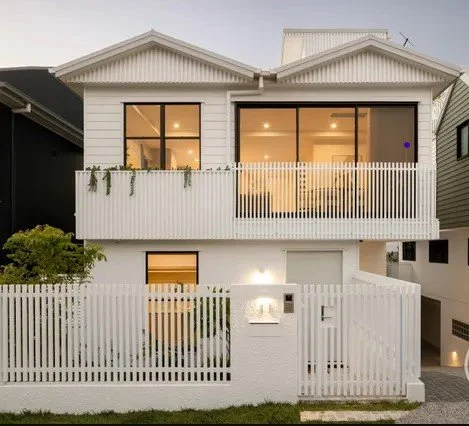
Competition often eases slightly, which can make this a more comfortable environment for prepared buyers. Quality homes continue to transact, but buyers generally feel less pressure to rush.
What this means at the higher end of the market
Above around $1.5m
At this level, buyers are more likely to be equity-rich, downsizers, lifestyle buyers, or business owners. Borrowing capacity still matters, but it is usually not the primary driver of decision-making.
In this segment, interest rate changes tend to
influence sentiment more than affordability
slow activity slightly rather than disrupt pricing
have less impact on well-located, high-quality homes
Scarcity, location, and long-term suitability tend to play a bigger role than short-term rate movements.
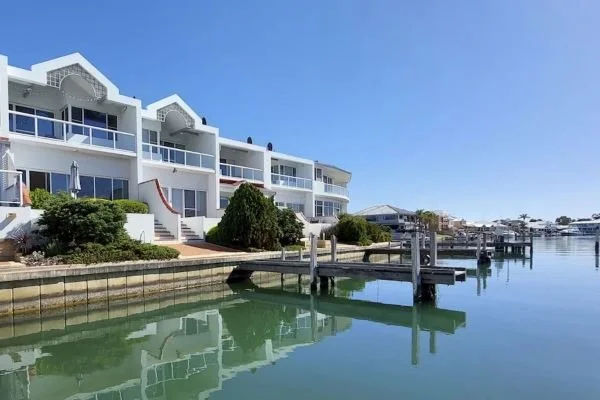
Apartment markets
Apartment markets on the Gold Coast often behave differently again. Buyer profiles frequently include downsizers, investors, cash buyers, and part-time residents.
While interest rates can affect investor sentiment, well-located apartments in tightly held buildings tend to be more resilient than national headlines suggest, particularly where lifestyle appeal and rental demand remain strong.
Headlines versus local context
While interest rate headlines are useful, they are blunt instruments. They rarely distinguish between buyer types, price brackets, or local conditions.
Market conditions can vary significantly by suburb, which is why local context is so important when buying on the Gold Coast.
On the Gold Coast, understanding who you are competing with, and why they are buying, is often far more important than the cash rate itself. A first-home buyer, an upsizer, and a downsizer will all respond very differently to the same rate environment.
This is why local context matters.
A final word
Debt levels and borrowing comfort always matter. Buying within your means is essential. But interest rate movements do not affect all parts of the Gold Coast market in the same way or at the same time.
Buyers relocating from interstate or New Zealand often benefit from understanding how local market dynamics play out before making decisions.
In many cases, rising or uncertain rates change the pace of the market rather than the price. For well-prepared buyers, this can create more balanced, less pressured conditions.
If you are considering buying on the Gold Coast, it is worth looking beyond the headlines and understanding how the specific segment of the market you are entering actually behaves.
That clarity often makes all the difference.