Schools in Queensland
A practical guide for relocating families
For many families moving to Queensland, schooling is one of the most important decisions to get right. While the system is straightforward once you understand it, it works differently to New Zealand, the UK and some other Australian states, particularly around catchments, senior schooling and enrolment timing.
This guide explains how Queensland schools work, how to research them properly, and how schooling choices connect closely with where you live
.
How the Queensland school system works
Queensland schooling is structured as follows.
Primary school runs from Prep to Year 6
Secondary school runs from Years 7 to 12
Year 12 is the final year of schooling
Students graduate with a Queensland Certificate of Education, known as the QCE
There are three main school sectors.
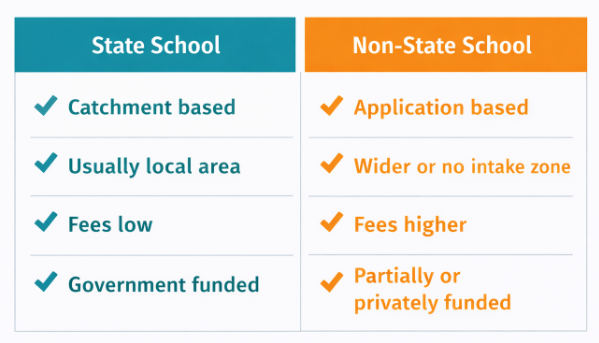
State schools, which are government funded and catchment based
Catholic schools, which are partially funded and application based
Independent schools, which are privately run and fee paying
State schools enrol students primarily based on where the family lives. Catholic and independent schools enrol based on availability and their own intake criteria.
New Zealand vs Queensland school years – what is different
This is a common source of confusion for families moving from New Zealand, especially those with older children.
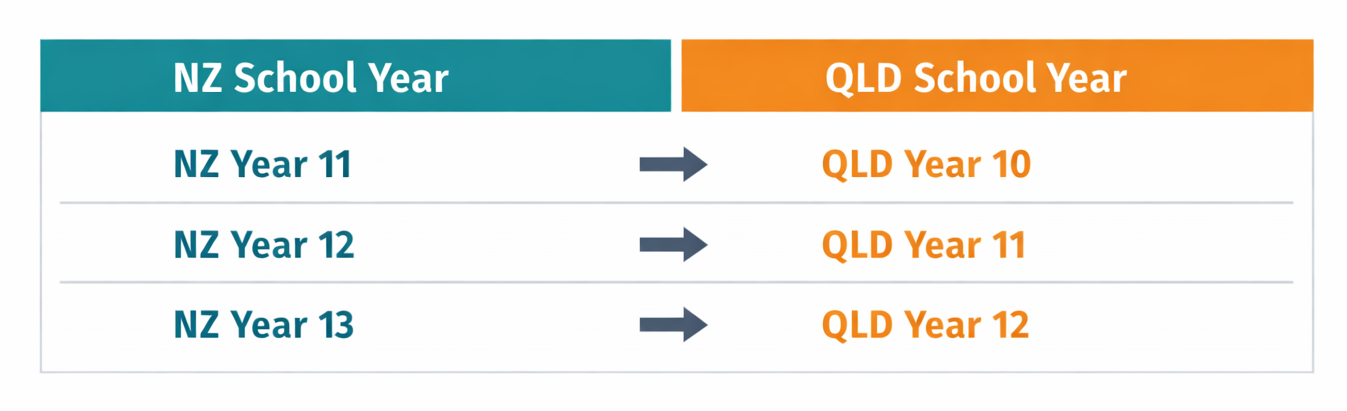
In New Zealand, most students attend school from Year 1 through to Year 13. In Queensland, schooling runs from Prep to Year 12. Although the numbering is different, students typically finish school at a similar age.
Queensland finishes at Year 12; NZ finishes at Year 13
The year numbers look different, but students usually finish at a similar age
Schools place students based on age, previous learning, and pathway suitability, not the label alone
Your child is not losing or repeating a year. The systems are labelled differently, and subject pathways are structured in a different way.
For families moving with teenagers, timing becomes more important. Moves into senior secondary years usually require additional planning because subject choices, assessment pathways, and school capacity can be more restrictive.
Use this quick guide to translate NZ senior years into Queensland year levels.
Catchments explained and why they matter
For state schools, catchments are critical.
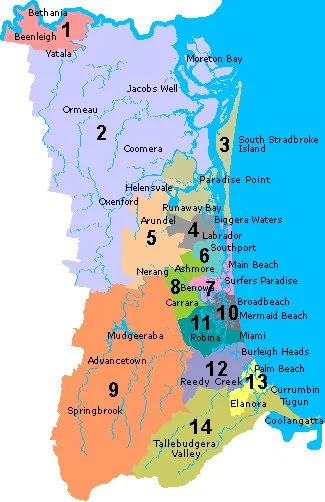
A catchment is the geographic area a state school is designated to serve. To be eligible for enrolment, you must usually be living within that catchment at the time you apply.
Important points families often overlook.
You must be residing at the address when you apply
Temporary accommodation may not be sufficient
Catchment boundaries can change
High demand schools enforce catchments strictly
Two properties only streets apart can fall into different catchments, which is why this should never be assumed.
Checking catchments using EdMap
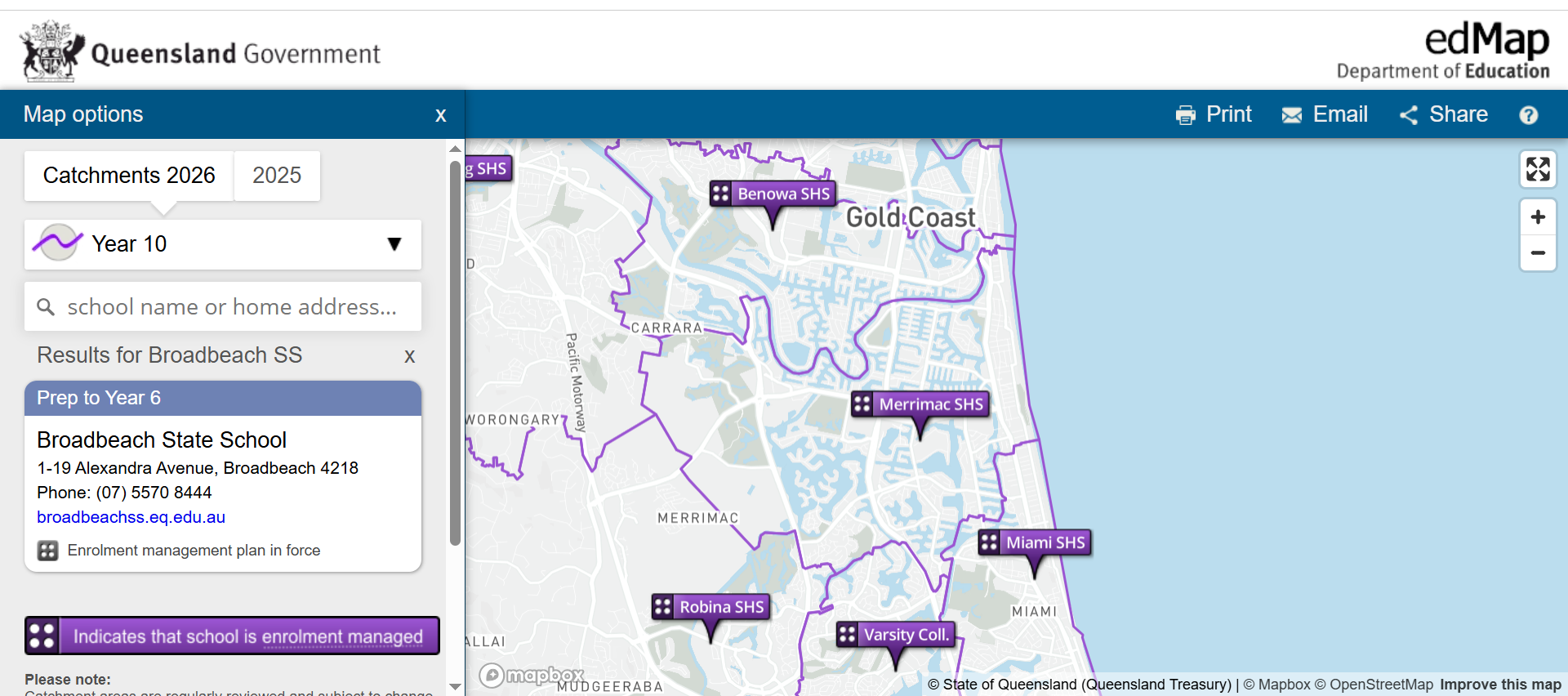
Queensland provides a very useful official tool called EdMap.
EdMap is the Queensland Government’s interactive map that allows you to.
search an address and see which state schools service it
search a school and view its catchment boundary
check catchments by year level where applicable
EdMap should always be your first step before committing to a suburb, rental or purchase. While it is the authoritative source, it is still wise to confirm enrolment eligibility directly with the school, particularly for high demand areas or senior year levels.
Public schools in Queensland – what to expect
Queensland has many strong state schools, particularly in established family suburbs. However, quality, culture and facilities can vary significantly between schools.
When assessing public schools, it is helpful to look beyond headline results and consider.
leadership and school culture
class sizes and facilities
specialist programs such as sport, music or STEM
pastoral care and learning support
A school that looks strong on paper is not always the right fit for every child, especially during a major relocation.
Private and independent schools – important realities
Private and independent schools are popular with relocating families, but they are not always an easy fallback option.
Key things to be aware of.
many schools have waitlists years in advance
enrolment fees and ongoing costs can be significant
availability varies by year level
location and daily commute still matter
Families are often surprised to find that private school availability can be tighter than state school catchments, particularly on the Gold Coast.
Using results, exams and rankings to evaluate schools
Some families use academic results, ATAR outcomes and rankings as part of their research. These can be useful indicators, but they do not tell the full story of what a school is like day to day.
Results often reflect a combination of factors including student intake, cohort size, subject selection and how many students are pursuing an ATAR pathway. A school with strong wellbeing, leadership and support may not rank highly, and a highly ranked school may not suit every child.
Resources to help you research Queensland schools
Families commonly use a mix of the following resources.
Catchments and eligibility
EdMap, the Queensland Government catchment mapping tool, is the most important starting point for state schools.
National school profiles
My School, published by ACARA, provides school profiles, context indicators and comparative data. It is best used to understand context rather than as a simple league table.
School-published information
Most schools publish information that is often more helpful than rankings, including.
senior subject handbooks and pathways
specialist programs and academies
transition and wellbeing support
leadership and strategic priorities
Media lists and surveys
Some families also refer to media summaries. The Courier-Mail publishes a Queensland best and worst rated schools list based on parent satisfaction surveys, along with related coverage using parent, teacher and student feedback.
These lists can be useful as a high-level scan, but they should be treated as a starting point only, not a definitive assessment of school quality.
A note on accuracy and usefulness
Results, rankings and survey-based ratings should be interpreted carefully.
results can change year to year, particularly for smaller cohorts
high rankings may reflect selective enrolment or subject mix rather than teaching quality alone
survey results capture sentiment at a point in time and can be influenced by expectations and local issues
online reviews tend to skew towards extreme experiences
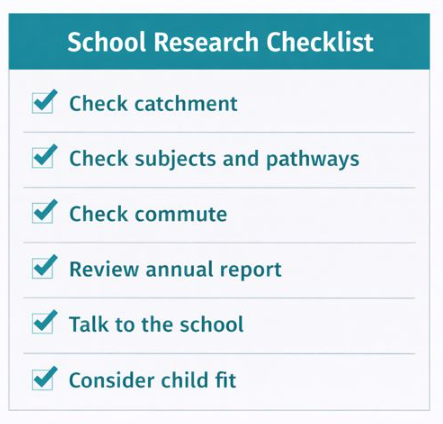
The most reliable approach is to combine official eligibility checks, a small number of trusted data points, and a sense-check of fit for your child and family logistics.
How schools and suburb choice are connected
In Queensland, school access and suburb choice are closely linked.
Popular school catchments often influence.
property prices
rental competition
how quickly homes are secured
This is why many relocating families choose to rent first, secure school enrolment, and then buy once they are confident the suburb and school combination works.
Checking schools after choosing a home is one of the most common and costly mistakes families make.

How I can help
If schooling is a priority for your move, getting clarity early can make the entire relocation smoother.
I regularly help families.
shortlist suburbs based on school catchments
check enrolment eligibility before making offers
balance affordability, commute and schooling priorities
plan rent-first strategies for smoother transitions
A short conversation early can save months of stress later.
Disclaimer
This information is general guidance only. School catchments, enrolment policies, programs and performance measures can change, and availability may be affected by capacity. Always confirm current eligibility, offerings and entry requirements directly with the school and relevant Queensland education authorities before making decisions about where to live or enrol.